Northwest Honey Bee Forge
FORAGE
Building a dependable, diverse food supply for honey bees and native pollinators
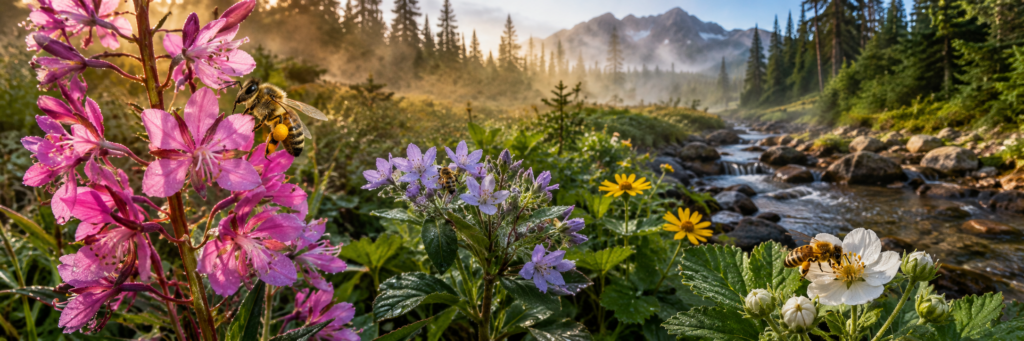
Honey bees use the entire surrounding landscape as their foraging territory.
LESSON PURPOSE: Understand how bees choose forage and how Washington gardeners and beekeepers can provide nectar and pollen from early spring through fall.
Learning objectives
• Explain the different roles of nectar and pollen.
• Describe why bloom timing and plant diversity matter.
• Use planting patterns and colors that help bees find forage.
• Identify useful Washington forage plants by season.
• Explain the value of flowering vegetables, herbs, weeds, and blackberries.
- How Honey Bees Choose Forage
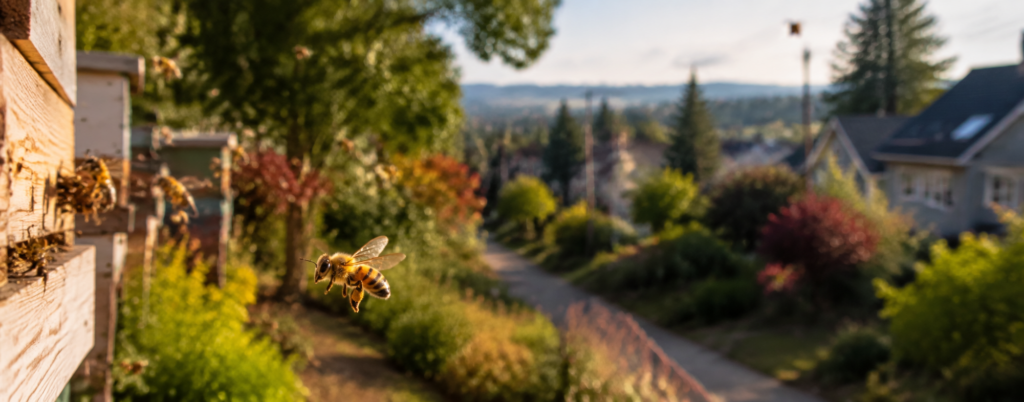
Bees may fly across neighborhoods, gardens, and open land to locate a rewarding food source.
Honey bees seek flowers that offer the best overall reward. Nectar sugar concentration is important, but bees also respond to scent, flower abundance, accessibility, distance, and how quickly they can collect the food. Nectar contains different proportions of sucrose, glucose, and fructose, so it is more accurate to think in terms of total nectar quality than glucose alone.
Foragers commonly work within a few miles of the hive. They may travel about three miles for a profitable source and can fly farther when necessary. Planting good forage close to the hive saves energy, but bees do not recognize property lines. In a city or town, they may use gardens, street trees, parks, vacant lots, and flowerbeds throughout the neighborhood.
KEY IDEA Think beyond the bee yard. The quality of the entire surrounding landscape affects the colony’s food supply.
- Nectar, Pollen, and Flowering Weeds
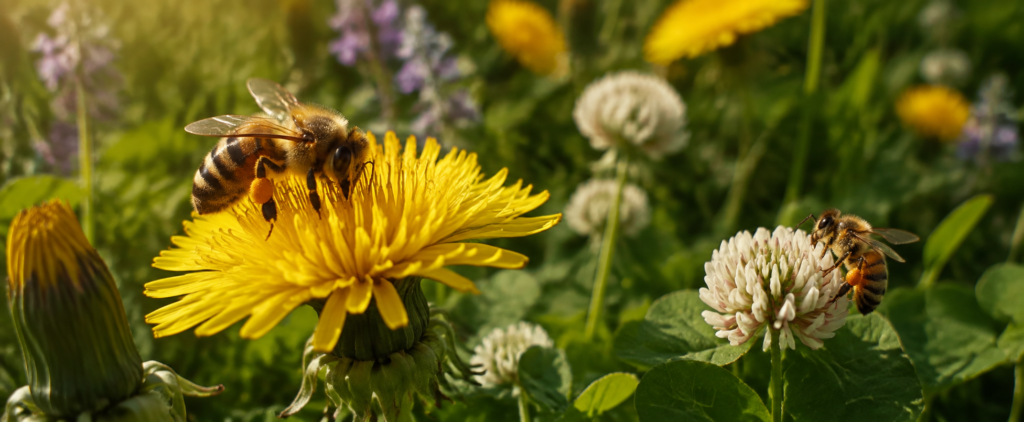
Nectar provides carbohydrates; pollen supplies protein, fats, vitamins, and minerals.
The most valuable forage plants often provide both nectar and pollen. Nectar is the colony’s main carbohydrate and energy source. Pollen supplies protein and other nutrients needed especially by nurse bees and developing brood. No single plant provides everything a colony needs throughout the year.
Many plants called weeds produce abundant or concentrated nectar and useful pollen. Dandelion, clover, borage, blackberry, and other volunteer plants can become important forage. Because bees actively visit flowering weeds, never treat blooming weeds with a pesticide that could expose pollinators. Mow or remove blossoms before a permitted treatment when the product label requires it.
REMEMBER A plant can be unwanted in one location and still be valuable forage. Manage it responsibly without exposing visiting bees.
- Provide Blooms Through the Entire Season
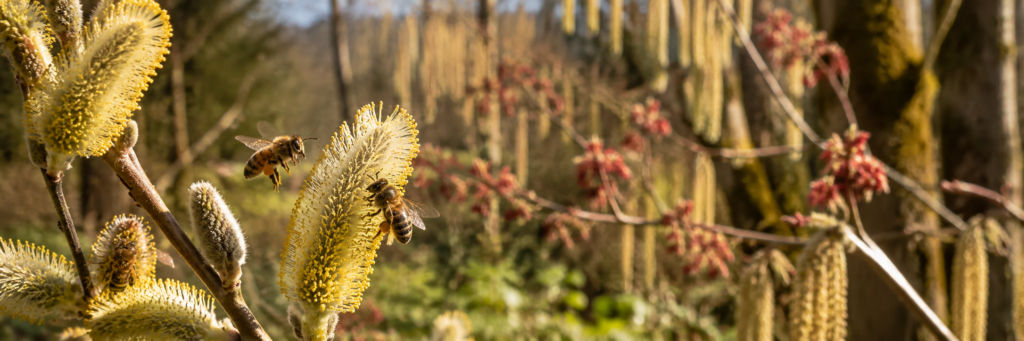
Pussy willow, maple, alder, and filbert help start the spring forage season.
Honey bees are active from the first suitable spring days through fall, so they need a sequence of food sources rather than one short burst of flowers. A strong forage plan has overlapping blooms: when one plant finishes, another begins.
Pussy willow, alder, and filbert can provide valuable early pollen used to support brood rearing. Early-blooming maples may provide both nectar and pollen depending on the species and weather. These trees and shrubs can be especially important before many garden flowers open.
WATCH FOR GAPS A yard may look beautiful in June but provide little food in March, August, or September. Plan for the lean periods.
- Diversity Creates a Better Diet
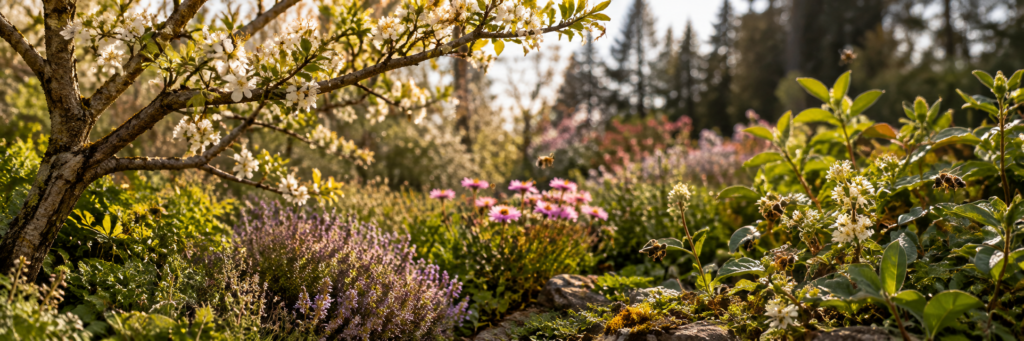
Trees, shrubs, perennials, and groundcovers create forage at different heights and times.
Each plant species produces pollen and nectar with its own nutritional profile. A mixture of sources gives bees access to different amino acids, lipids, minerals, and plant compounds. Dietary diversity helps colonies avoid depending too heavily on a single, incomplete food source.
Use several layers of vegetation: flowering trees, shrubs, perennial flowers, annuals, herbs, and groundcovers. This increases biodiversity, extends the bloom calendar, and supports honey bees as well as many native pollinators with different body sizes and tongue lengths.
PRACTICAL GOAL Choose multiple plant families—not only different colors or cultivars of the same species.
- Plant in Large, Visible Clumps
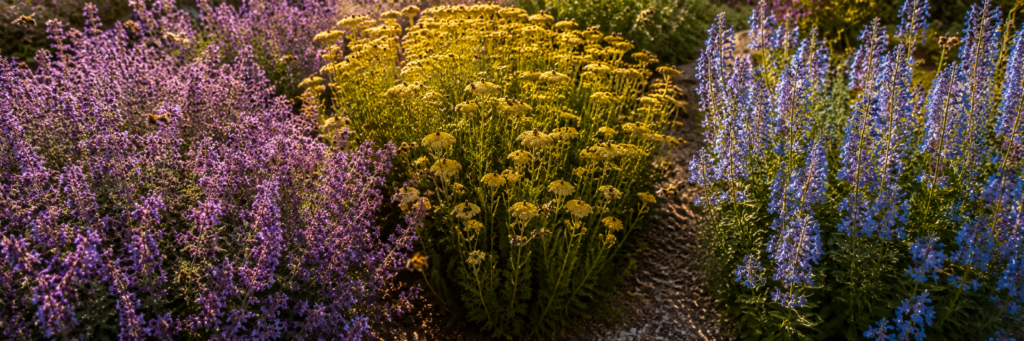
Broad patches help bees see a resource and forage efficiently without moving far between flowers.
A clump of one flowering species attracts more pollinators than the same number of plants scattered throughout a large area. Grouped flowers create a stronger visual and scent signal and allow bees to move quickly from bloom to bloom.
When space allows, make each patch approximately four feet or more in diameter. Smaller gardens can still use repeated groups, containers placed together, or a broad strip of the same plant. Combine several large patches with different bloom periods for the best result.
PLANTING PATTERN Plant in drifts or blocks: one broad patch for spring, another for summer, and another for late season.
- Native Plants and Native Pollinators
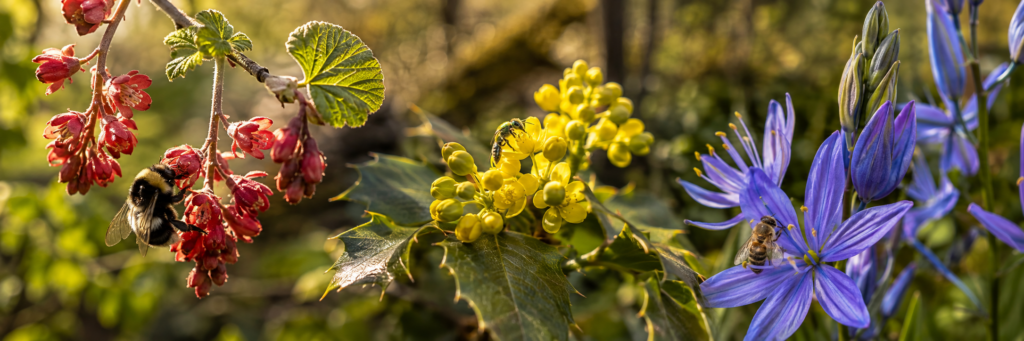
Native bumble bees, sweat bees, and mason bees often benefit strongly from locally native plants.
Native pollinators use many of the same flowers as honey bees, but locally native plants are especially important when the goal is to support native bee diversity. Native plants are adapted to regional soil and climate and may provide specialized pollen, nesting materials, or bloom timing that local insects depend upon.
Good Washington examples include red-flowering currant, Oregon grape, camas, goldenrod, fireweed, lupine, penstemon, serviceberry, snowberry, willow, yarrow, and native asters. Choose species appropriate to your side of the Cascades and the conditions at your site.
REGIONAL CHOICE Use the Xerces Society Maritime Northwest list for western Washington and the Inland Northwest list for eastern Washington.
- Flower Colors That Attract Bees
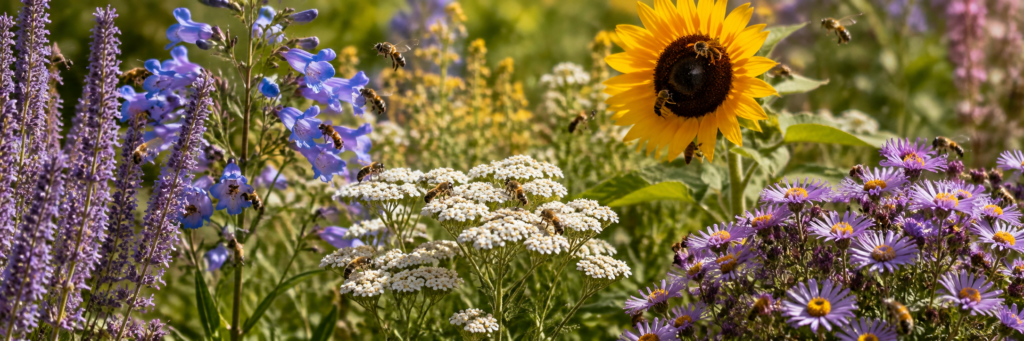
Blue, purple, violet, white, and yellow flowers are commonly attractive and visible to bees.
Bees frequently visit blue, purple, violet, white, and yellow blossoms. Their vision differs from ours: they can see ultraviolet patterns on flowers that act like landing guides leading toward nectar and pollen.
Color alone does not guarantee that a plant is useful. Some highly altered ornamental flowers produce little accessible pollen or nectar. Select open, nectar- and pollen-producing varieties, then use color to make those good forage plants easier for bees to locate.
BEST COMBINATION: Choose bee-visible colors, abundant blooms, accessible flower shapes, and a real nectar or pollen reward.
- Recommended Washington Forage Plants
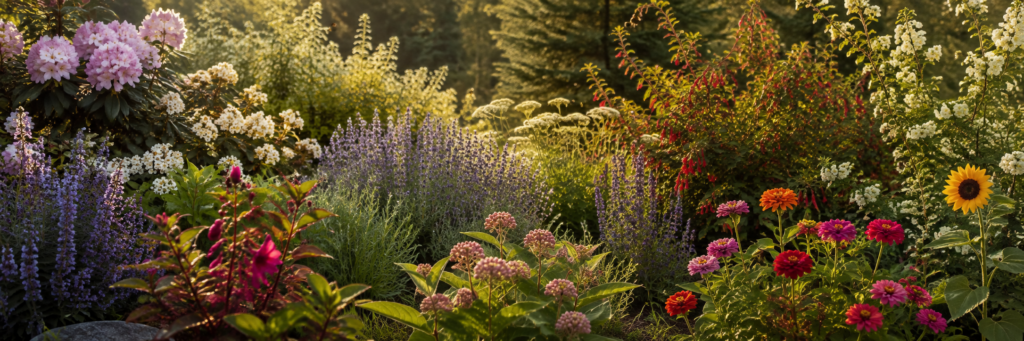
A Washington forage garden can combine native and garden plants in overlapping seasonal groups.
Oregon State University Extension and regional pollinator organizations recommend many plants that perform well in the Pacific Northwest. Always match a plant to your rainfall, soil, sunlight, irrigation, elevation, and local invasive-species rules.
Plant group Recommended forage
Trees and shrubs Blueblossom, ocean spray, serviceberry, red-flowering currant, salal, rhododendron, willow, snowberry, Oregon grape, huckleberry, madrone. Perennials Lavender, Russian sage, catmint, milkweed, aster, fireweed, goldenrod, lupine, penstemon, stonecrop, yarrow, mint.
Annuals Zinnia, sunflower, California poppy, borage, Mexican sunflower.
Garden herbs Basil, English lavender, hyssop, marjoram, rosemary, oregano, lemon balm.
CAUTION Confirm that every plant is suitable and legal in your county. Some non-native plants can spread aggressively.
- Easy Spring Flowers
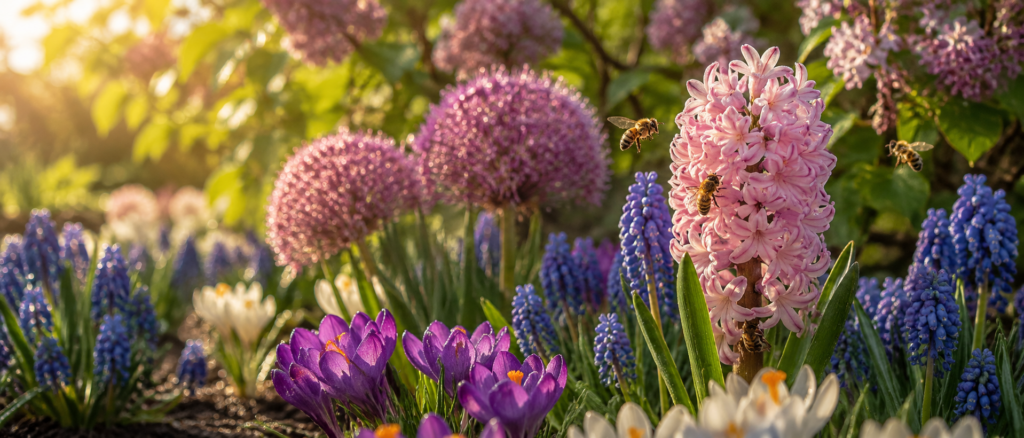
Crocus, hyacinths, grape hyacinths, and alliums can provide colorful early garden forage.
Easy spring bulbs include crocus, Dutch hyacinth, grape hyacinth, and allium. Lilac adds a larger flowering shrub to the spring sequence. Plant bulbs in broad groups rather than isolated single plants, and avoid pesticide treatments on open blossoms.
Spring weather can interrupt flight for days at a time, so several early plant species are better than relying on one. A mix of bulbs, shrubs, and trees increases the chance that something will be blooming when a warm flying day arrives.
SPRING PLAN Combine low bulbs, medium shrubs, and early flowering trees for a layered start to the season.
- Spring Trees and Shrubs
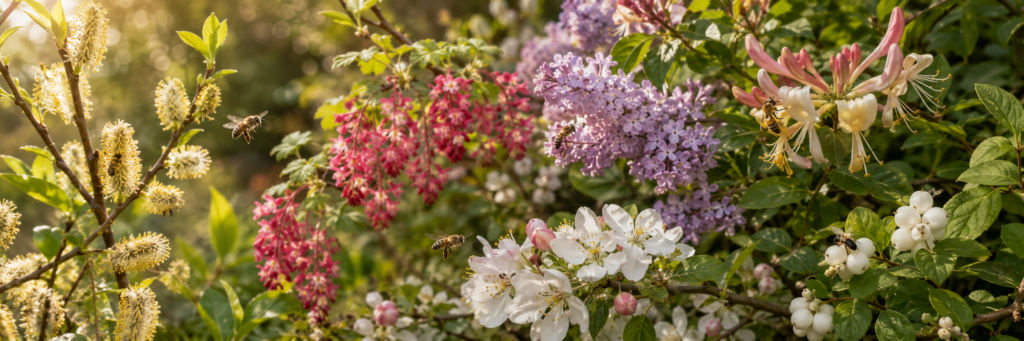
Flowering woody plants can produce thousands of blossoms in a relatively small ground area.
Useful spring trees and shrubs include willow, red-flowering currant, lilac, honeysuckle, fruit trees, and snowberry. A mature tree or shrub can offer far more individual flowers than a small bed of annuals.
Choose unsprayed plants and coordinate pest management with bloom. Fruit-tree sprays must follow label directions exactly; some treatments should be applied before bloom, after petals fall, or when bees are not exposed.
LANDSCAPE VALUE Woody plants are long-term forage investments. Select several species with different flowering windows.
- Summer Forage
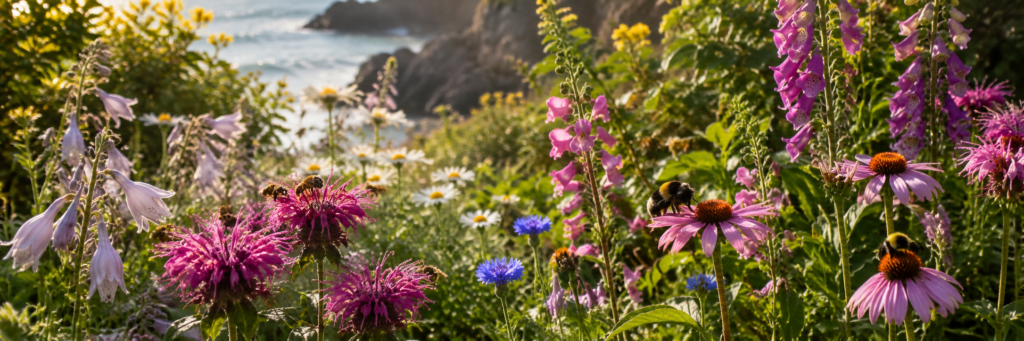
Summer gardens can support honey bees and native bees with many flower shapes and plant heights.
Popular summer flowers include bee balm, cosmos, purple coneflower, snapdragon, foxglove, hosta, daisy, and cornflower. Summer trees and shrubs can include ocean spray, Oregon grape, viburnum, and carefully managed non-native ornamentals where locally appropriate.
Summer can appear abundant, but hot dry periods may reduce nectar production. Water plants deeply as appropriate, preserve a variety of bloomers, and observe which plants are actually receiving bee visits rather than judging only by appearance.
OBSERVATION SKILL Walk the garden at different times of day. Record which plants have bees on them and when their bloom ends.
- Late-Season Forage
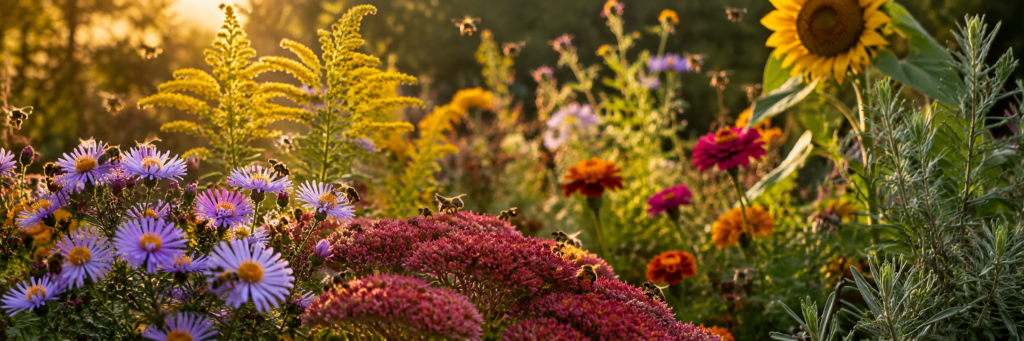
Asters, sedum, goldenrod, zinnias, and sunflowers help carry colonies toward fall.
Late-season flowers are especially valuable because many earlier resources have finished. Asters, sedum or stonecrop, goldenrod, marigold, zinnia, sunflower, and some late-blooming willows can provide nectar or pollen as colonies prepare for winter.
Do not cut every flowering stem as soon as summer ends. Allow healthy late bloom to continue, and leave some stems standing after frost when they may also provide nesting or overwintering habitat for native insects.
LATE-SUMMER GAP Plan specifically for August and September. These months can become nutritionally difficult even when the landscape is still green.
- Let Food Plants and Herbs Flower
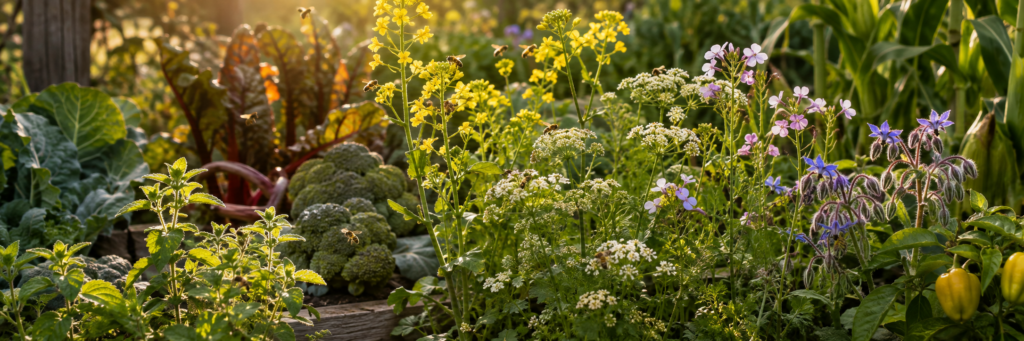
A vegetable garden can feed people, bees, and future plantings when selected crops are allowed to flower and set seed.
Gardens are a good food source for both people and bees. Let a few radishes, cilantro plants, broccoli plants, rhubarb stalks, and herbs continue growing until they flower and produce seed. Their blossoms can become excellent forage after the normal harvest stage.
Basil, borage, lemon balm, oregano, rosemary, marjoram, and other herbs are frequently visited by bees. Allowing selected plants to set seed also allows the gardener to collect seed for future plantings—when the variety is suitable for seed saving.
GARDEN PRACTICE Harvest most of the crop, but designate a few healthy plants as pollinator and seed plants.
- Useful Flowering Weeds
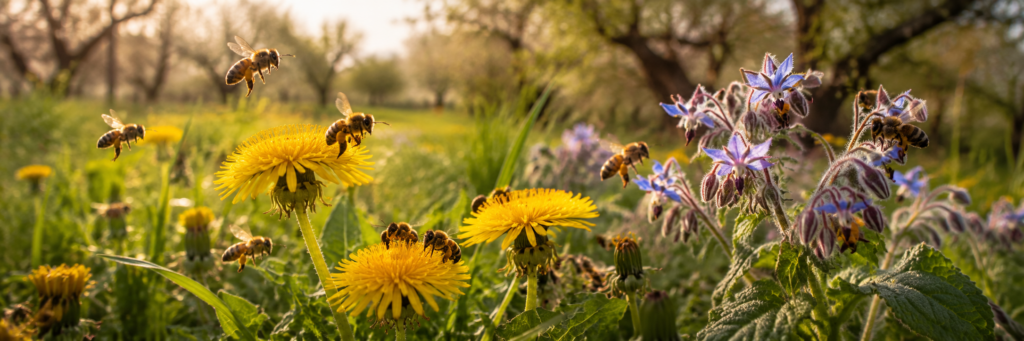
Dandelion and borage can provide easily accessible spring nectar and pollen.
Dandelion is a familiar example of a plant that many people call a weed but bees use as forage. Its pollen can help broaden the early spring diet when colonies are raising brood. Borage is another dependable bee plant and can reseed readily where conditions suit it.
Dandelion should be viewed as one part of a varied diet, not the colony’s only spring resource. Where weeds must be controlled, avoid exposing pollinators: follow the label, prevent treatment of open bloom, and consider mowing, hand removal, or other nonchemical methods.
BALANCED VIEW Keep useful flowers where appropriate, control invasive plants responsibly, and always protect bees visiting bloom.
- Blackberry Forage in Western Washington
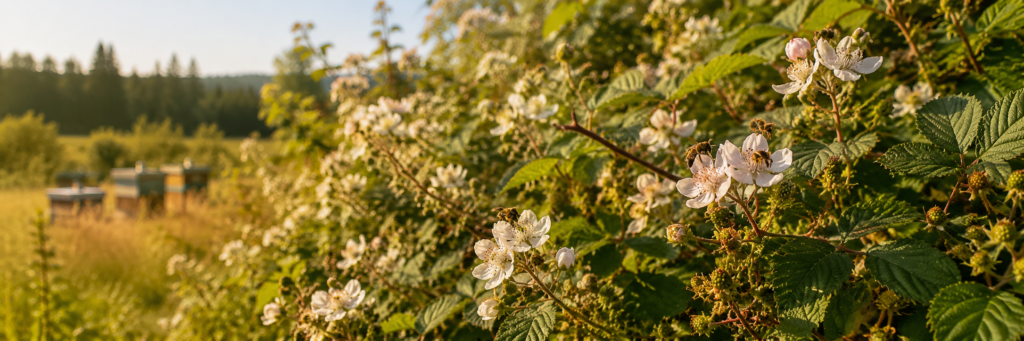
Blooming blackberry thickets can become major nectar and pollen resources in western Washington.
Blackberries are often considered weeds, but their abundant flowers provide a large share of seasonal nectar and pollen in many west-side areas. Blackberry bloom can contribute strongly to colony nutrition and is a major honey flow for many western Washington beekeepers.
Himalayan blackberry is a Washington Class C noxious weed. Statewide control is not automatically required, but counties may establish local requirements. Check with the county noxious weed control board. Where local rules allow, responsible management may include containing and cutting back a patch rather than allowing it to spread unchecked.
MANAGE RESPONSIBLY Never plant or spread invasive blackberry. Follow local weed rules while recognizing the forage value of existing bloom.
Build a Forage Plan
A simple four-season checklist
| 1. EARLY SPRING Willow, maple, alder, filbert, crocus, hyacinth, Oregon grape. |
| 2. LATE SPRING Fruit trees, currant, lilac, camas, serviceberry, blackberry. |
| 3. SUMMER Lavender, catmint, bee balm, coneflower, ocean spray, herbs. |
| 4. LATE SUMMER–FALL Asters, sedum, goldenrod, zinnias, sunflowers, late herbs. |
Knowledge check
- What are the different nutritional roles of nectar and pollen?
- Why is “highest in glucose” an incomplete description of how bees select nectar?
- Why are large clumps more effective than scattered single plants?
- Name two early, two summer, and two late-season Washington forage plants.
- How can a vegetable gardener provide additional bee forage?
- What must a landowner check before deciding how to manage Himalayan blackberry?
Field assignment
Walk the area within sight of your apiary or home. Record at least five plants currently in bloom, the pollinators visiting them, and the month each plant begins and ends flowering. Identify one seasonal gap and select a suitable plant to fill it.
Recommended Plant Reference Lists
Native plants — examples from the chapter
Aster, California poppy, currant, elder, fireweed, goldenrod, huckleberry, larkspur, lupine, madrone, mint, Oregon grape, Pacific waterleaf, penstemon, rabbitbrush, rhododendron, saskatoon/serviceberry, scorpion-weed, snowberry, stonecrop, sunflower, wild buckwheat, willow, and yarrow.
Garden plants — examples from the chapter
Basil, borage, cotoneaster, English lavender, globe thistle, hyssop, marjoram, Mexican sunflower, rosemary, and wallflower.
How to select from these lists
- Verify that the plant fits your exact Washington region.
- Check sunlight, soil moisture, mature size, and irrigation needs.
- Favor plants that visibly receive bee visits in your area.
- Combine plant families and overlapping bloom periods.
- Avoid invasive plants and cultivars with little accessible forage.
| NOTE: Additional honey bee and native pollinator plant lists may be included in other parts of this website |
Sources and Further Reading
- Puget Sound Beekeepers Association. Bee-Friendly Gardening. https://www.pugetsoundbees.org/bee-friendly-gardening/
- Oregon State University Extension. Top plants to attract bees, butterflies and hummingbirds to Oregon gardens (formerly “12 Plants to Entice Pollinators to Your Garden”). https://extension.oregonstate.edu/news/top-plants-attract-bees-butterflies-hummingbirds-oregon-gardens
- Xerces Society. Native Plants for Pollinators and Beneficial Insects: Maritime Northwest Region. https://xerces.org/publications/plant-lists/native-plants-for-pollinators-and-beneficial-insects-maritime-northwest
- Xerces Society. Native Plants for Pollinators and Beneficial Insects: Inland Northwest Region. https://xerces.org/publications/plant-lists/native-plants-for-pollinators-and-beneficial-insects-inland-northwest
- Pollinator Partnership. Find Your Roots regional native plant selection tool. https://www.pollinator.org/find-your-roots-tool
- Washington State Noxious Weed Control Board. Washington’s Noxious Weed Laws. https://www.nwcb.wa.gov/washingtons-noxious-weed-laws
- Pierce County Beekeepers Association. Honeybees Need Weeds (2014). http://pcbeekeepers.org/wp-content/uploads/2014/11/Honeybees-Need-Weeds.pdf
- Leach, M. E., and Drummond, F. A. A Review of Native Wild Bee Nutritional Health (2018). https://onlinelibrary.wiley.com/doi/10.1155/2018/9607246
Note
Plant bloom and forage value vary with weather, cultivar, location, and management. Always use current pesticide labels and current state and county weed requirements. Generated photographs in this lesson are educational visualizations; use regional field guides for plant identification.