Helping Honey Bees and Native Pollinators pp. 102 – 103
POLLINATOR-FRIENDLY
PRACTICES
Simple actions anyone can take to support honey bees and native pollinators
| PURPOSE This lesson gives beekeepers and non-beekeepers clear, practical ways to improve food, water, shelter, and safety for pollinators. |
By the end of this lesson, learners should be able to:
- Name four major pressures affecting pollinators.
- Describe how to provide season-long forage, safe water, and nesting habitat.
- Explain safer pesticide practices.
- Identify ways to educate others and support research.
Supporting honey bees and native pollinators • Washington and the Inland Northwest
POLLINATOR-FRIENDLY PRACTICES | TRAINING LESSON
1. Why Pollinators Need Our Help
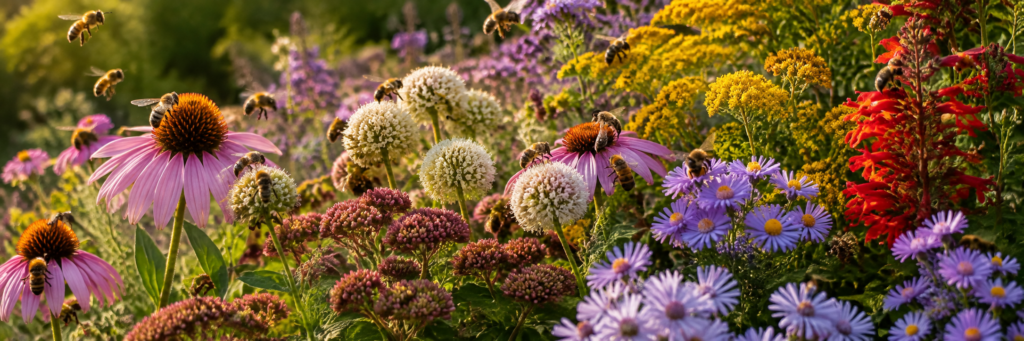
Pollinators may face several pressures at once.
Pollinators are threatened by the loss of biodiversity, destruction and fragmentation of habitat, limited forage in monoculture landscapes, and exposure to pesticides. A single problem can weaken pollinator populations, but several problems occurring together can have an even greater effect.
Individuals cannot solve every large-scale environmental problem, but yards, farms, churches, schools, businesses, and community spaces can all become safer and more useful to pollinators. Small improvements repeated across a community can provide meaningful food, water, shelter, and protection.
| KEY IDEA Helping pollinators is not limited to keeping honey bees. Non-beekeepers can make an important difference too. |
Supporting honey bees and native pollinators • Washington and the Inland Northwest
POLLINATOR-FRIENDLY PRACTICES | TRAINING LESSON
2. Plant Pollinator Food Sources
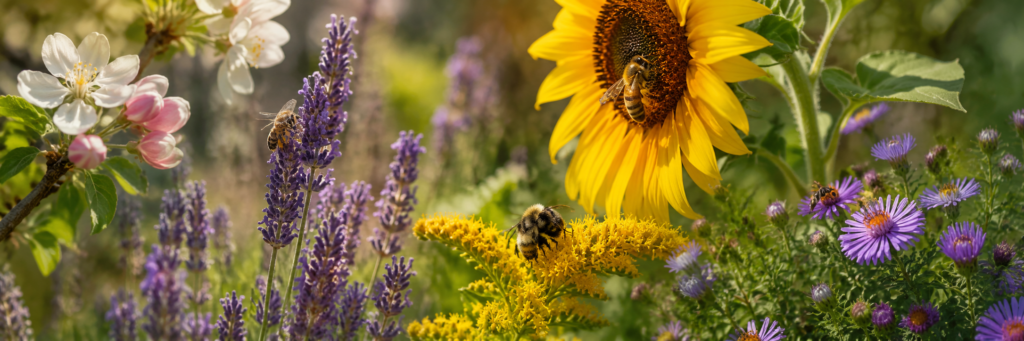
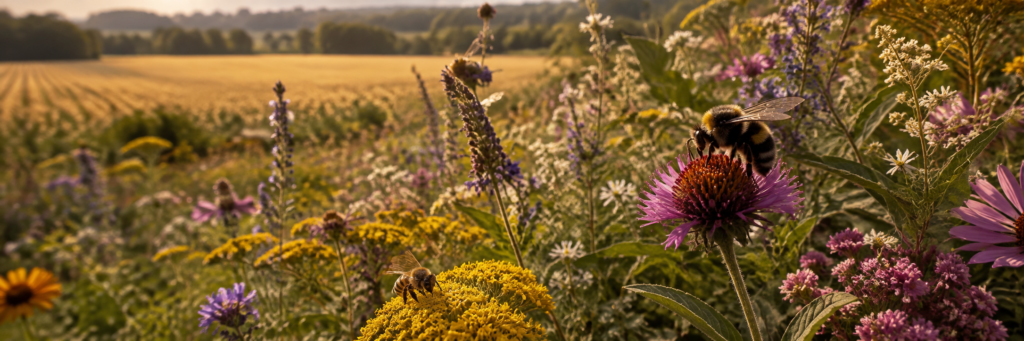
A sequence of blooms helps feed pollinators from spring through fall.
Choose a mixture of plants that bloom at different times from April through September. Early flowers help bees coming out of winter, summer flowers support peak activity, and late flowers help colonies and native bees prepare for the end of the season.
Variety matters. Different flowers provide different pollen and nectar resources, and dietary diversity is closely connected to bee health. When it fits your growing conditions and goals, emphasize native plants because they are adapted to the region and often support local pollinators especially well.
Include early-, mid-, and late-season bloomers.
Plant several flower shapes, colors, and heights.
Use groups or patches of the same plant so bees can forage efficiently.
Avoid cultivars that provide little or no pollen or nectar.
| LOCAL RESOURCE Use Plants for Pollinators in the Inland Northwest when selecting plants for eastern Washington, northeastern Oregon, and northern Idaho. |
Supporting honey bees and native pollinators • Washington and the Inland Northwest
POLLINATOR-FRIENDLY PRACTICES | TRAINING LESSON
3. Provide Safe, Reliable Water
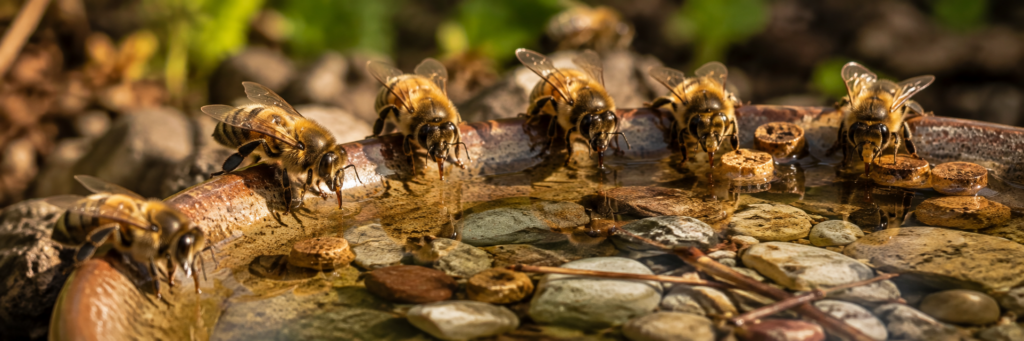
A bee should be able to stand on a dry surface while drinking.
Bees need water, but deep, smooth-sided containers can become drowning hazards. Fill a shallow container with rocks, marbles, corks, or sticks so bees can land in a dry place and reach the water safely. Keep the container filled and clean enough to prevent foul buildup.
Honey bees use scent to locate water and may prefer water that contains certain dissolved nutrients. Sodium-rich water can be attractive during much of the season. In fall, when pollen is scarce, bees may seek water containing calcium, magnesium, and potassium. This helps explain why bees sometimes visit fertilized potting soil, pools, or hot tubs even when cleaner-looking water is available.
| REMEMBER The water source must be dependable. A container that repeatedly dries out will encourage bees to search elsewhere. |
Supporting honey bees and native pollinators • Washington and the Inland Northwest
POLLINATOR-FRIENDLY PRACTICES | TRAINING LESSON
4. Establish Water Before Bees Choose Another Source
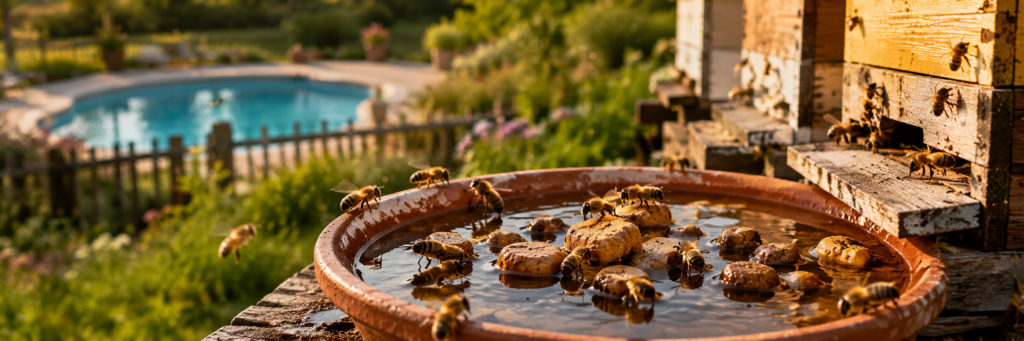
Make your water source the easiest dependable choice.
Bees, yellowjackets, and wasps are opportunistic and usually use the most convenient water near their nest. A neighbor’s bird bath, swimming pool, hot tub, or children’s wading pool can quickly become a regular destination.
A beekeeper is responsible for managing the behavior of the honey bee colonies in their care. Once honey bees learn a water location, changing that habit can be difficult. Put out a reliable water source before strong spring flight begins, locate it closer to the hives than neighboring water, and keep it supplied throughout the active season.
| BEST PRACTICE Set up water in late winter or very early spring—before the bees establish a route to someone else’s property. |
Supporting honey bees and native pollinators • Washington and the Inland Northwest
POLLINATOR-FRIENDLY PRACTICES | TRAINING LESSON
5. Limit the Use of Pesticides
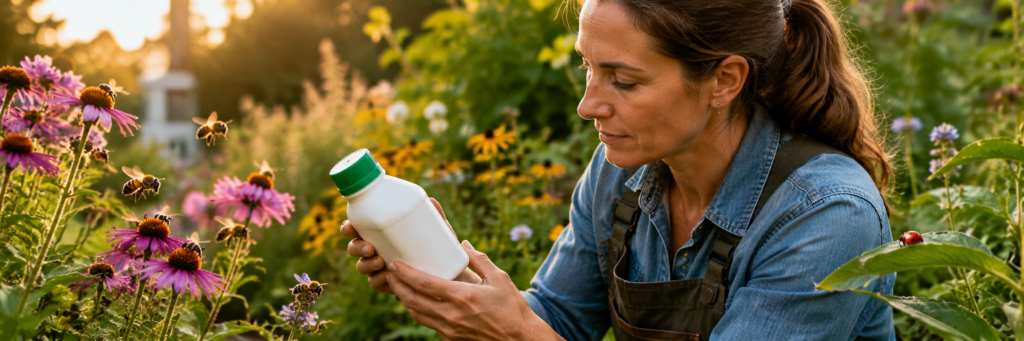
Prevent exposure first; use chemical controls only with care.
Limit chemicals that are hazardous to bees and other beneficial insects. This includes insecticides, some fungicides, herbicides, and combination products. Before applying anything, correctly identify the pest, decide whether treatment is necessary, and consider nonchemical or least-toxic options.
Never apply a pesticide to blooming plants—including flowering trees and weeds—when the label prohibits it or when pollinators may be exposed. Read and follow the entire label. When a permitted application is necessary, late evening is often the lower-risk time because fewer pollinators are flying, but the label remains the controlling instruction.
Broad pesticide use can also kill natural enemies such as lady beetles and other beneficial insects. Removing those predators may allow pest populations to rebound or become worse. Good pest management protects the helpful organisms that already provide control.
| SAFETY RULE The pesticide label is the law. Follow its crop, rate, timing, protective-equipment, and pollinator-protection directions exactly. |
Supporting honey bees and native pollinators • Washington and the Inland Northwest
POLLINATOR-FRIENDLY PRACTICES | TRAINING LESSON
6. Maintain Areas That Provide Shelter
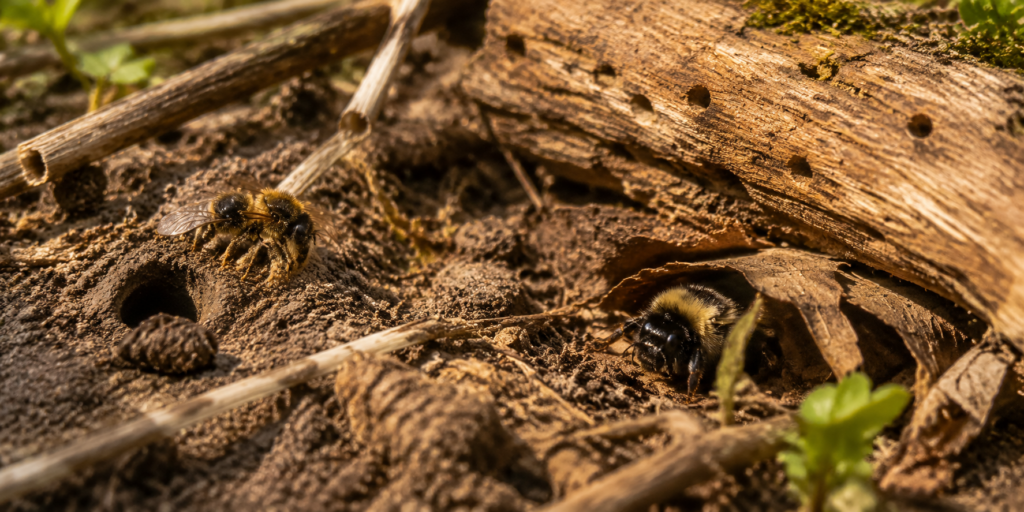
Bare soil, dry stems, leaves, twigs, and dead wood can provide nesting habitat.
Leave a few natural areas containing leaves, dead grass, twigs, branches, dry stems, or sound dead wood. These materials provide nesting and overwintering places for many native pollinators and other beneficial insects. A well-designed bee hotel can help some cavity-nesting species, but natural habitat is often simpler and more dependable.
Many native bees nest in the ground. Support them by leaving a sunny, well-drained patch of bare or lightly vegetated soil undisturbed. Avoid heavy mulch, tilling, flooding, and pesticide contamination in the nesting area.
Other native bees nest in beetle holes, hollow stems, or the soft centers of cut plant stems. Leaving stems standing through winter and delaying garden cleanup until warmer weather protects developing bees. In other words, a pollinator-friendly garden has permission to be a little messy.
| IMPORTANT DISTINCTION Most native bees do not live in honey bee-style hives. Their nesting needs are different, so a variety of natural materials is valuable. |
Supporting honey bees and native pollinators • Washington and the Inland Northwest
POLLINATOR-FRIENDLY PRACTICES | TRAINING LESSON
7. Educate Yourself, Friends, and Neighbors
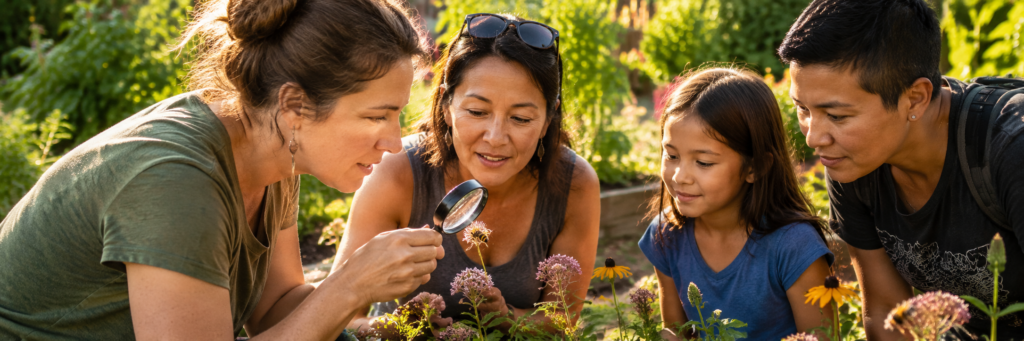
Accurate local information can lead to better choices across a whole community.
Read current information about the pollinators found in your area. Attend programs offered by beekeeping associations, conservation groups, universities, extension offices, native plant organizations, and other reliable educators.
Share what you learn in a friendly, practical way. Explain that people do not need to own honey bees to help pollinators. Encourage neighbors to plant a longer bloom sequence, provide safe water, reduce pesticide exposure, and leave small areas for nesting.
| CONVERSATION STARTER Ask: ‘What is one small change we could make here to provide food, water, shelter, or safety for pollinators?’ |
Supporting honey bees and native pollinators • Washington and the Inland Northwest
POLLINATOR-FRIENDLY PRACTICES | TRAINING LESSON
8. Donate to Support Research
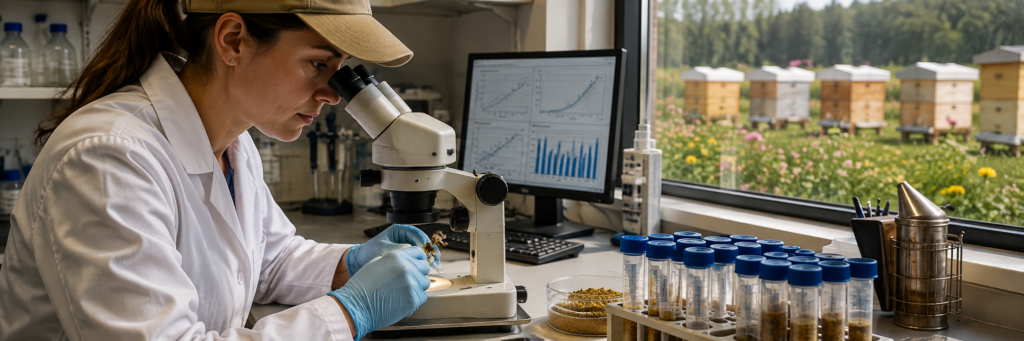
Research turns questions about nutrition, pests, habitat, and disease into practical guidance.
Financial support for honey bee and native pollinator research is another way to become bee friendly. Research helps scientists and beekeepers understand nutrition, habitat, pests, diseases, pesticides, queen health, and colony losses—and then turn that knowledge into better management practices.
Begin locally when possible and review how an organization uses donations. Examples that support honey bee research and education include the Washington State Beekeepers Association, the Washington State University Honey Bees + Pollinators Program, and Bee Informed Partnership.
- Washington State Beekeepers Association — wasba.org
- Washington State University Honey Bees + Pollinators Program — bees.wsu.edu/donate
- Bee Informed Partnership — beeinformed.org
| TAKE ACTION Choose one organization to learn about, support, or share with others. |
Supporting honey bees and native pollinators • Washington and the Inland Northwest
Put the Lesson Into Practice
A simple four-part pollinator plan
| 1. FOOD Add at least one early-, mid-, and late-season flowering plant. |
| 2. WATER Set up a shallow, reliable water source with dry landing places. |
| 3. SHELTER Leave a small patch of bare soil, stems, leaves, or dead wood undisturbed. |
| 4. SAFETY Reduce pesticide use and never ignore label directions. |
Knowledge check
- Why is a sequence of bloom from April through September better than one short burst of flowers?
- What should be placed in a shallow bee-water container, and why?
- Why should a beekeeper establish water before spring flight?
- Name two ways to protect ground- or stem-nesting native bees.
- What is the controlling instruction whenever a pesticide is used
Personal action commitment
The pollinator-friendly action I will take this month is:
________________________________________________________________________________
I will complete it by: __________________________
Supporting honey bees and native pollinators • Washington and the Inland Northwest
POLLINATOR-FRIENDLY PRACTICES | TRAINING LESSON
Sources and Further Reading
Ogle, D., et al. Plants for Pollinators in the Inland Northwest. Xerces Society / USDA NRCS, revised 2011. https://xerces.org/publications/plant-lists/biology-technical-note-no-24-plants-for-pollinators-in-inland-northwest
Casey, C. Bees Need Water: Establish Water Sources in Late Winter to Keep Them Out of the Pool in Summer. UC Agriculture and Natural Resources, 2018. https://ucanr.edu/blog/bee-gardener/article/bees-need-water-establish-water-sources-late-winter-keep-them-out-pool
Xerces Society. Nesting Resources and guidance for ground-, stem-, and cavity-nesting native bees. https://xerces.org/pollinator-conservation/nesting-resources
Washington State University Honey Bees + Pollinators Program. Support Our Program. https://bees.wsu.edu/donate/
Washington State Beekeepers Association. https://wasba.org/
Bee Informed Partnership. https://beeinformed.org/
Instructor note: Adapt planting recommendations to local climate, soil, irrigation, and the pollinator species present. Always consult current pesticide labels and local regulations.
Supporting honey bees and native pollinators • Washington and the Inl